
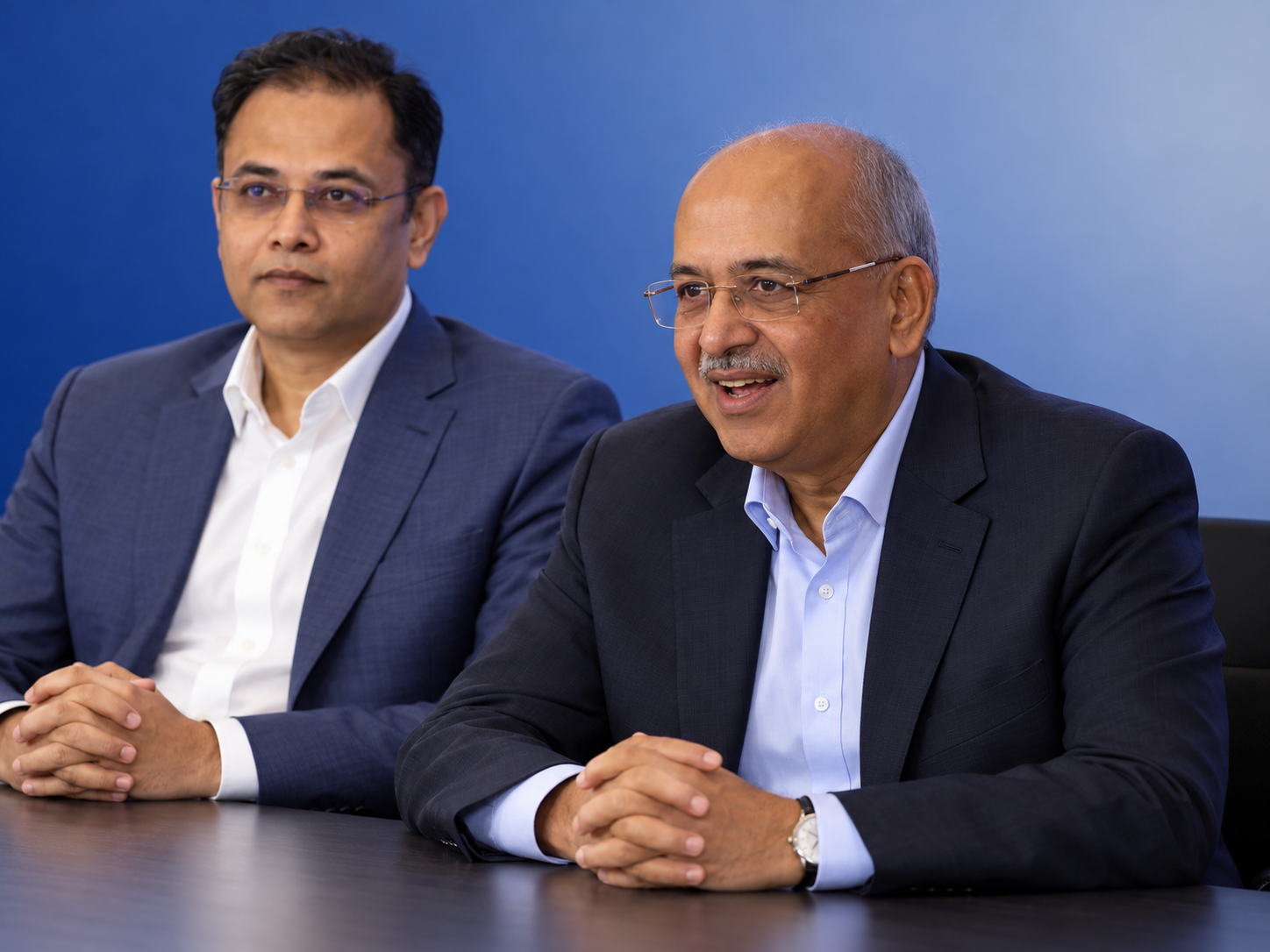
Dilip Shanghvi and Jensen Huang are two influential entrepreneurs whose companies have transformed very different industries. Shanghvi built Sun Pharmaceutical Industries into a global pharmaceutical business, while Huang co-founded NVIDIA and helped establish its position at the center of modern artificial intelligence and accelerated computing.
Both men have achieved extraordinary financial success, earned international recognition, and maintained long-term involvement in the businesses they founded. Yet their careers followed different paths, shaped by distinct markets, technologies, and business strategies.
Is there a connection between Dilip Shanghvi and Jensen Huang? As of October 2026, there is no publicly confirmed direct business partnership, joint venture, family relationship, or shared investment arrangement between them. Their names can be compared meaningfully because of their entrepreneurial achievements and the growing relationship between artificial intelligence and pharmaceutical research.
Understanding their individual backgrounds also explains why these business leaders attract international attention.
Quick Bio: Dilip Shanghvi and Jensen Huang
| Detail | Dilip Shanghvi | Jensen Huang |
|---|---|---|
| Full name | Dilip Shanghvi | Jen-Hsun Huang, professionally known as Jensen Huang |
| Birth year | 1955 | 1963 |
| Age in October 2026 | 71 | 63 |
| Nationality | Indian | American, born in Taiwan |
| Profession | Entrepreneur and pharmaceutical business leader | Entrepreneur and technology executive |
| Best known for | Founding Sun Pharmaceutical Industries | Co-founding NVIDIA |
| Company founded | Sun Pharmaceutical Industries | NVIDIA Corporation |
| Founding year | 1983 | 1993 |
| Current position | Founder and Executive Chairman | Co-founder, President and CEO |
| Primary industry | Pharmaceuticals and healthcare | Semiconductors, computing and AI |
| Education | Commerce graduate, University of Calcutta | Oregon State University and Stanford University |
| Major recognition | Padma Shri, 2016 | Robert N. Noyce Award and IEEE Founder’s Medal |
| Family | Married; two children, Aalok and Vidhi | Married to Lori Huang; two children |
Are Dilip Shanghvi and Jensen Huang Connected?
The most important distinction is between a documented personal connection and a comparison of two prominent business figures.
Shanghvi is associated primarily with Sun Pharma, an Indian pharmaceutical company involved in developing, manufacturing, and commercializing medicines. Huang leads NVIDIA, an American technology company known for graphics processing units, accelerated computing, and artificial intelligence infrastructure.
There is no established public record demonstrating that Shanghvi and Huang founded a company together, serve on the same corporate board, or maintain a formal business partnership.
Similarly, no publicly verified information establishes a personal or family relationship between them.
Their industries are becoming increasingly relevant to one another. Artificial intelligence is being applied to biological research, molecular modeling, and drug discovery, creating opportunities for pharmaceutical companies and computing technology providers.
However, this broad industry relationship should not be mistaken for evidence of a specific collaboration between Sun Pharma and NVIDIA.
Who Is Dilip Shanghvi?
Dilip Shanghvi is an Indian entrepreneur best known as the founder of Sun Pharmaceutical Industries Limited, one of India’s largest pharmaceutical companies.
His entrepreneurial background is closely connected to the medicine distribution business operated by his father. Before establishing his own company, Shanghvi gained exposure to pharmaceutical products and the commercial needs of the healthcare market.
He studied commerce at Bhawanipur Education Society College, affiliated with the University of Calcutta.
Unlike entrepreneurs who began their careers with advanced scientific qualifications, Shanghvi entered pharmaceuticals with a business and distribution background.
That experience helped him understand the importance of product selection, medical demand, efficient operations, and market access.
In 1983, he established Sun Pharma with financial assistance from his father. Forbes has reported that the initial amount was approximately $200.
The company began with five psychiatry products and a small marketing team.
What started as a modest pharmaceutical enterprise eventually became a major international business serving healthcare markets across multiple continents.
How Shanghvi Built Sun Pharma
Sun Pharma’s early growth came from establishing a presence in selected therapeutic categories before expanding into additional areas of medicine.
The company gradually developed manufacturing capabilities, strengthened its domestic distribution network, and entered international markets.
Under Shanghvi’s leadership, acquisitions became a particularly important part of its expansion strategy.
In 2010, Sun Pharma acquired a controlling interest in Taro Pharmaceutical Industries, strengthening its presence in the United States and dermatology-related markets.
Another defining development was the acquisition of Ranbaxy Laboratories.
The transaction was announced in April 2014 and completed on March 25, 2015. It significantly expanded Sun Pharma’s international scale and product portfolio.
The Ranbaxy acquisition also presented substantial integration and regulatory challenges, demonstrating that large pharmaceutical transactions involve more than financial investment.
Sun Pharma subsequently continued expanding its specialty medicine business.
In 2023, it completed the acquisition of Concert Pharmaceuticals, and in 2025, it acquired Checkpoint Therapeutics, strengthening its involvement in innovative therapeutic development.
These transactions reflect the company’s movement beyond traditional generic medicines toward differentiated and specialty products.
His Leadership Role in 2026
An important recent development in Shanghvi’s career was his transition from managing director to executive chairman.
Effective September 1, 2025, Shanghvi stepped down as Sun Pharma’s managing director while continuing his leadership involvement as executive chairman.
Kirti Ganorkar succeeded him as managing director.
The change was part of the company’s leadership succession arrangements rather than a departure from the business Shanghvi founded.
He also serves as chairman of Sun Pharma Advanced Research Company, which focuses on pharmaceutical research and drug delivery technologies.
His contributions have received recognition beyond the corporate sector.
In 2016, the Government of India awarded him the Padma Shri for his contributions to trade and industry.
He has also held public institutional responsibilities, including an appointment to the Reserve Bank of India’s central board in 2018 and the chairmanship of Gujarat Biotechnology University in 2022.
These positions illustrate the wider influence of his experience in Indian business and industry.
Who Is Jensen Huang?
Jensen Huang, also known as Jen-Hsun Huang, is a Taiwanese-born American entrepreneur and the co-founder, president, and chief executive officer of NVIDIA.
Born in 1963, Huang spent part of his childhood in Asia before moving to the United States.
His educational journey eventually took him to Oregon State University, where he studied electrical engineering.
He later earned a master’s degree in electrical engineering from Stanford University in 1992.
Before establishing NVIDIA, Huang worked at Advanced Micro Devices and LSI Logic, gaining experience in the semiconductor industry.
In 1993, he co-founded NVIDIA alongside Chris Malachowsky and Curtis Priem.
The company initially concentrated on technologies that improved computer graphics, particularly for video games and multimedia applications.
Huang has remained NVIDIA’s chief executive since its founding, an unusually long tenure in the technology industry.
During that period, NVIDIA developed from a graphics-focused chip company into a major supplier of computing technologies used in artificial intelligence, scientific research, robotics, and data centers.
How Jensen Huang Transformed NVIDIA
NVIDIA’s development reflects several important technological decisions.
In 1999, the company introduced its graphics processing unit, or GPU, helping advance real-time computer graphics.
GPUs were originally associated mainly with video games, but their ability to perform many calculations simultaneously made them valuable for a much wider range of applications.
A significant milestone came in 2006 with NVIDIA’s introduction of CUDA, a computing platform that enabled developers to use GPUs for general-purpose parallel processing.
CUDA helped researchers apply GPU computing to scientific and engineering problems.
In 2012, NVIDIA technology contributed to the success of AlexNet, a landmark deep-learning system that demonstrated the potential of neural networks for image recognition.
As artificial intelligence developed, demand increased for the computing power required to train and operate complex AI models.
NVIDIA became a major supplier of this infrastructure.
Its technologies now support applications ranging from generative AI and autonomous systems to scientific simulations.
Huang’s long-term investment in GPU computing and software ecosystems helped position NVIDIA for these developments.
The Connection Between AI and Pharmaceuticals
Although Shanghvi and Huang lead different industries, pharmaceutical research and artificial intelligence increasingly intersect.
Traditional drug development involves complex scientific processes, including investigating biological mechanisms, identifying potential drug candidates, conducting laboratory studies, and evaluating safety and effectiveness.
Artificial intelligence can support certain stages of this work by analyzing large datasets, modeling molecular structures, and helping researchers identify promising areas for investigation.
NVIDIA has developed computing technologies designed for healthcare and life sciences, including its BioNeMo platform.
In October 2026, NVIDIA announced additional collaborations involving organizations such as the University of Washington’s Institute for Protein Design and Siemens Healthineers, alongside other biotechnology and research companies.
These developments show how AI computing is being applied to biological research and medical technology.
Sun Pharma, meanwhile, is involved in pharmaceutical manufacturing, specialty therapies, and research through its associated businesses.
The two companies therefore operate in sectors that may benefit from similar scientific and technological advances.
That does not establish a Sun Pharma–NVIDIA partnership. No direct collaboration between the two companies has been publicly confirmed in the information reviewed for this article.
Comparing Their Business Strategies
Dilip Shanghvi and Jensen Huang demonstrate different approaches to long-term business development.
Shanghvi built his company through pharmaceutical expertise, geographic expansion, product diversification, and acquisitions.
A major part of Sun Pharma’s success came from identifying businesses and therapeutic markets that could strengthen its competitive position.
Huang’s strategy has relied heavily on technological development and investment in computing platforms.
Rather than remaining focused exclusively on computer graphics, NVIDIA developed technologies with applications in scientific computing and, later, artificial intelligence.
There is also an important difference between their markets.
Pharmaceutical companies must navigate medical research, manufacturing quality requirements, regulatory approvals, healthcare systems, and intellectual property.
Semiconductor companies face challenges involving chip architecture, manufacturing partnerships, software compatibility, computing performance, and rapid technological change.
Despite these differences, both leaders demonstrate the commercial importance of developing capabilities that remain valuable over many years.
Their success cannot be reduced to a single product, acquisition, or technological breakthrough.
Dilip Shanghvi vs Jensen Huang: Net Worth
Both entrepreneurs appear on international billionaire rankings, although their estimated fortunes differ considerably.
According to the 2026 Forbes World’s Billionaires ranking, based on financial information as of March 1, 2026:
- Dilip Shanghvi: Approximately $25.6 billion, ranking 100th globally.
- Jensen Huang: Approximately $154 billion, ranking eighth globally.
These figures represent estimates at a particular point in time, not fixed amounts of personal cash or guaranteed future wealth.
Shanghvi’s fortune is closely associated with his pharmaceutical business interests, while Huang’s wealth is heavily influenced by his NVIDIA shareholdings.
Changes in stock prices, business valuations, and other assets can significantly affect their positions.
Consequently, online claims about either entrepreneur’s current net worth should always be checked against a dated financial estimate.
The size of their fortunes also does not establish any personal or commercial relationship between them.
Education and Family Background
Both entrepreneurs have publicly documented educational and family backgrounds, although they maintain different levels of public visibility.
Shanghvi’s education in commerce helped establish the business foundation for his pharmaceutical career.
He is married and has two children, Aalok Shanghvi and Vidhi Shanghvi, both of whom have held senior responsibilities within Sun Pharma.
Aalok has served as chief operating officer and executive director, while Vidhi has worked in the company’s consumer healthcare and distribution operations.
Huang’s academic foundation is in electrical engineering.
He met his wife, Lori Mills Huang, while they were students at Oregon State University. The couple have two children.
The Huangs have supported education and scientific research through philanthropy, including a substantial contribution to Oregon State University for a collaborative innovation and research facility.
Their charitable activities also include support for engineering education and research institutions.
Despite public interest in both families, private personal details should not be treated as established facts unless supported by reliable reporting or direct public statements.
Awards and Public Recognition
Shanghvi’s business achievements have earned recognition from Indian and international institutions.
Alongside the Padma Shri, his honors include business leadership and entrepreneurship awards from organizations and publications such as Forbes India, The Economic Times, and the All India Management Association.
Huang has received recognition for his contributions to the semiconductor and computing industries.
His honors include the Semiconductor Industry Association’s Robert N. Noyce Award, the IEEE Founder’s Medal, and election to the United States National Academy of Engineering.
He was also named Fortune’s Businessperson of the Year in 2017.
In 2026, Huang was appointed to the United States President’s Council of Advisors on Science and Technology.
These recognitions demonstrate their influence within their respective professional fields rather than indicating any shared institutional role.
Why Are Their Names Searched Together?
People encountering Dilip Shanghvi and Jensen Huang together may be interested in their business achievements, companies, wealth, or possible professional connections.
Both are recognizable founders associated with publicly traded companies and international billionaire rankings.
Their careers also provide a comparison between two significant business sectors: pharmaceuticals and computing technology.
Another relevant question concerns whether artificial intelligence could transform pharmaceutical development.
That is a legitimate area of industry analysis, but it does not prove that the two entrepreneurs have worked together.
The precise reason any individual searches for both names cannot be established from the search phrase alone.
Verified Facts and Unconfirmed Claims
Several distinctions help prevent misinformation about these entrepreneurs.
It is verified that Shanghvi founded Sun Pharma in 1983 and that Huang co-founded NVIDIA in 1993.
Their leadership positions, educational histories, major company milestones, and prominent professional awards are also documented.
However, claims that they are relatives, business partners, or co-investors are not supported by publicly confirmed evidence reviewed here.
There is likewise no verified announcement establishing a personal meeting or jointly managed business initiative between them.
An absence of public confirmation does not prove that two individuals have never met or that their organizations could never work together.
It simply means that a direct relationship should not be presented as fact without reliable evidence.
Interesting Topic : Blog BlueFlamePublishing: A Complete Guide to Its Content, Purpose, and Online Presence
Frequently Asked Questions
1. Who are Dilip Shanghvi and Jensen Huang?
Dilip Shanghvi is the founder and executive chairman of Sun Pharmaceutical Industries, an Indian pharmaceutical company. Jensen Huang is the co-founder, president, and CEO of NVIDIA, a technology company specializing in accelerated computing and artificial intelligence.
2. Are Dilip Shanghvi and Jensen Huang business partners?
There is no publicly confirmed direct business partnership between them as of October 2026. They lead different companies operating in different industries.
3. What companies did Dilip Shanghvi and Jensen Huang found?
Dilip Shanghvi established Sun Pharmaceutical Industries in 1983. Jensen Huang co-founded NVIDIA in 1993 with Chris Malachowsky and Curtis Priem.
4. Who is richer, Dilip Shanghvi or Jensen Huang?
Jensen Huang had the larger estimated fortune in Forbes’ March 2026 ranking. His estimated net worth was $154 billion, compared with approximately $25.6 billion for Shanghvi. These estimates fluctuate with financial markets.
5. Does NVIDIA work in the pharmaceutical industry?
NVIDIA supplies computing platforms and AI technologies used in healthcare, biotechnology, and drug discovery. However, its involvement in life sciences does not automatically establish a partnership with Sun Pharma.
6. Are Dilip Shanghvi and Jensen Huang related?
No family relationship between them has been publicly verified. Shanghvi is an Indian pharmaceutical entrepreneur, while Huang is a Taiwanese-born American technology executive.
7. What makes Dilip Shanghvi and Jensen Huang successful entrepreneurs?
Shanghvi developed a global pharmaceutical business through expansion, acquisitions, and product development. Huang helped build a leading computing technology company through sustained investment in GPUs, software platforms, and artificial intelligence infrastructure.
Conclusion
Dilip Shanghvi and Jensen Huang represent two different paths to global entrepreneurial success.
Shanghvi transformed a small pharmaceutical operation into a major international healthcare business. Huang helped build NVIDIA into a central participant in accelerated computing and artificial intelligence.
Their achievements share important themes, including long-term planning, innovation, and the ability to recognize opportunities in changing markets.
Although AI and pharmaceuticals increasingly intersect, no publicly confirmed direct relationship between the two entrepreneurs has been established.
Their individual accomplishments, rather than an assumed personal connection, provide the strongest foundation for understanding their significance in modern business.
